
effective rate on a bond; also called the effective interest rate. It considers the bond's face value. market price, nominal interest rate, and maturity period.If a bond was issued with a yield in excess of the nominal interest rate, it was sold at a discountbecause it is costing the company more than the stated interest rate.
The yield to maturity formula equals:
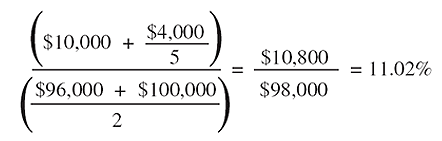
annualized percentage return of a bond held until its stated maturity. This is a commonly accepted method of comparing yields on bonds with different coupon interest rates, because it assumes that interest income will be reinvested at the current yield and it takes into account any adjustments for bond premium or discount. For this reason it differs from current yield which may be higher or lower.
Yield to maturity quotes may also differ from an investor's actual return at maturity because they assume constant reinvestment of interest at the currently quoted yield. This may or may not be accurate if the bonds are sold at prices above, or below, their face value, or par value. For easy reference, the yield to maturity of a given bond can be found in the bond tables prepared by financial publishers. Certain types of programmable calculators can also be used to compute yield to maturity. Also called effective rate of return.

