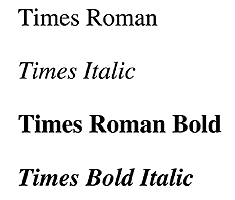
a particular design of lettering, in a consistent weight and style. Though typeface and font are frequently confused, a font is a particular size (10-point, 12-point, etc.) and style (bold, italic, bold italic, etc.) of a given typeface.
a particular design of lettering, in a consistent weight and style. Most of the typefaces used on computer printers today fall into the following categories (See Figure 280):
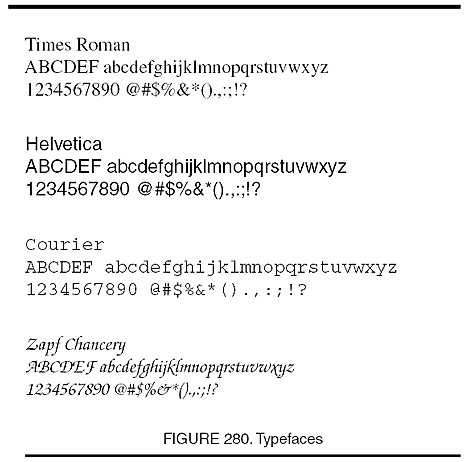
- Roman type, proportionally spaced, with serifs. This kind of type originated with the stone engravers of ancient Rome. "Proportionally spaced" means that different letters are different widths (e.g., M is wider than I); serifs are the marks at the ends of the strokes (e.g., the horizontal marks at the top and bottom of I). Times Roman is a popular roman typeface; it was designed by Stanley Morison for the London Times.
Roman type is the most readable kind of type and is used for the text of most books. Blocks of roman type should never be underlined; use italics instead (or boldface in some situations). Underlining text on typewriters was originally a substitute for italics.
Roman type usually includes some characters that are not on a typewriter, such as the dash (-) and distinct opening and closing quotation marks (" "). Be sure to use these where appropriate. See typesetting mistakes.
- Sans-serif type, proportionally spaced. A popular typeface of this kind is Helvetica. Sans-serif type is better for short captions, posters, or labels, but can be tiring to read for long periods.
- Fixed-pitch, typewriter-like typefaces. Courier and similar fixedpitch typefaces are used when all characters must be the same width in order to line up properly, such as in computer program listings (for an example, see COBOL, financial tables, and documents that were laid out for a fixed-pitch printer.
- Novelty typefaces such as Zapf Chancery. These should be used very sparingly to make dramatic-looking titles or mastheads.
particular style and design of alphabetic letters, numerals, and symbols that make up a font. Typefaces are designed by artists and usually named by them, with some faces bearing the name of the artist, such as Bodoni type.