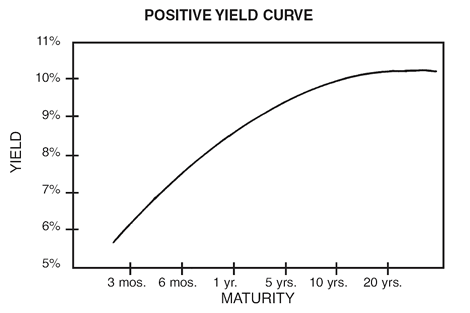
yield curve in which long-term rates are higher than short-term rates, so-called because yield curve has an upward slope, meaning longer maturities earn a higher rate of interest. It is also known as a normal yield curve because investors holding longer maturity securities expect to be compensated for assuming more interest rate risk. If the nominal interest rate on Treasury bonds maturing in, say, ten years, is higher than it is for three-month Treasury bills, the yield curve is said to be positive. Under the liquidity preference theory of interest rates, savers who commit their funds for a longer period of time expect to earn more interest than if they put their money out short-term. They give up liquidity, or ease of access to their money, in exchange for a liquidity premium (the higher interest rate), which explains why, under normal economic conditions, longer-term rates are higher than shorter-term rates. The opposite is an inverted yield curve. See illustration on next page.
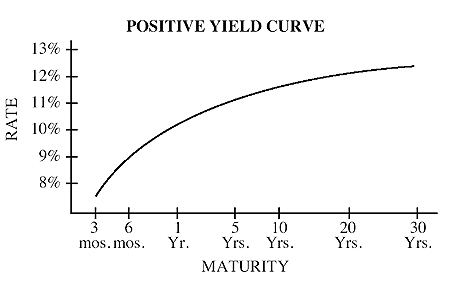
usual situation in which interest rates are higher on long-term debt securities than on short-term debt securities of the same quality.
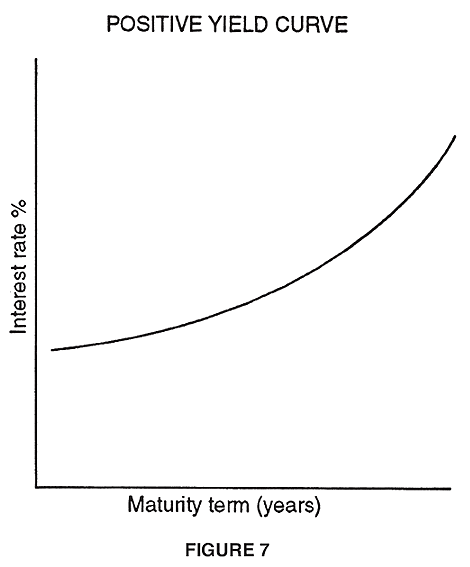
situation in which interest rates are higher on long-term debt securities than on short-term debt securities of the same quality. For example, a positive yield curve exists when 20-year Treasury bonds yield 10% and 3-month Treasury bills yield 6%. Such a situation is common, since an investor who ties up his money for a longer time is taking more risk and is usually compensated by a higher yield. When short-term interest rates rise above long-term rates, there is called an inverted yield curve. See chart.