
a method of representing continuous tone images with dots of solid color. The more closely spaced the dots, the darker the color. The resolution, or number of dots per inch (DPI), determines how many shades of gray can be produced.
the reproduction of a continuous-tone image (containing shades of gray or colors) by converting it into a pattern of very small dots of various sizes. (For an example, look closely at a picture in a newspaper or magazine.) Laser printers and printing presses can print shades of gray only as halftones.
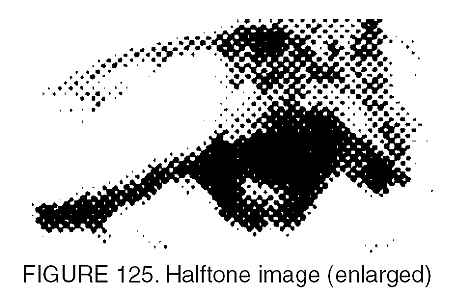
print reproduction with continuous-tone variations made by photographing the original image through a screen (in the camera) that breaks up the image into a pattern of dots of varying size. The copy then serves as a pattern for making the printing plate. (It is the dots that make the printing of tonal values possible.)
There are many variations of halftone copies, including a square halftone, where the corners are square and an overall screen is used; a silhouette halftone, where the background is removed; a vignette halftone, where the background fades away from the edges; a surprint, where a line negative (no tonal variation) is superimposed over a halftone (or vice-versa); and a highlight halftone or dropout halftone, where the dots are removed from some areas to give the finished product greater contrast.

